
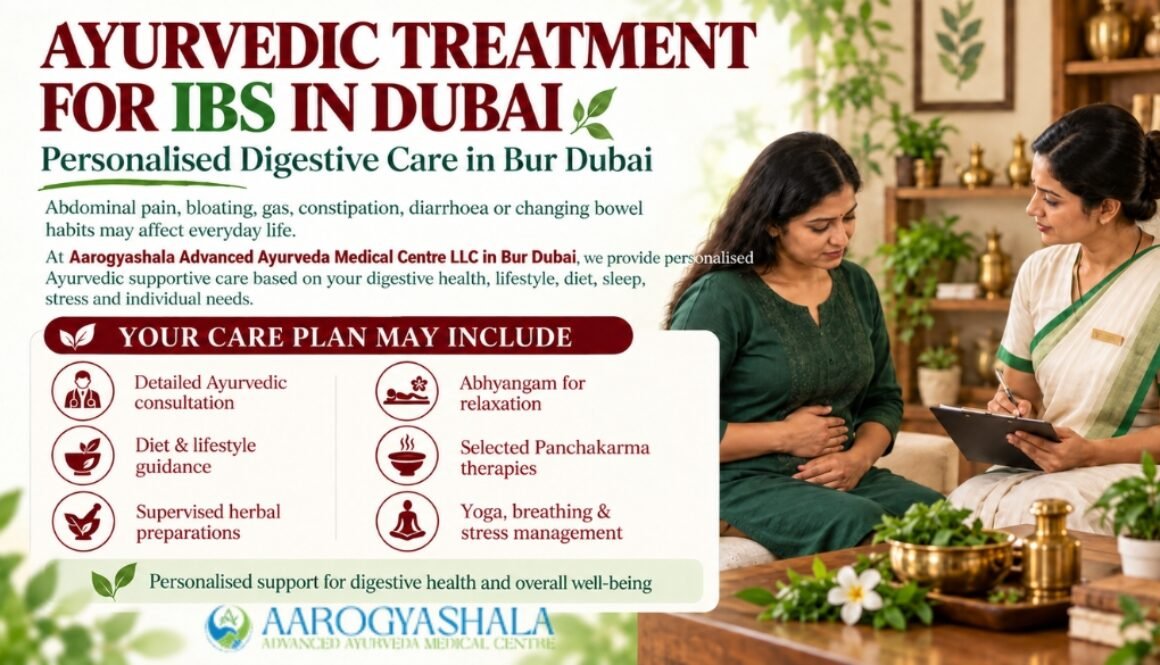
Ayurvedic treatment for IBS in Dubai | Aarogyashala
Ayurvedic Treatment for IBS in Dubai: Personalised Digestive Care in Bur Dubai
Irritable bowel syndrome (IBS) is a long-term digestive disorder that can cause recurring abdominal pain, bloating, gas, constipation, diarrhoea or alternating changes in bowel habits. Symptoms may fluctuate over time and can interfere with work, sleep, travel and everyday activities.
At Aarogyashala Advanced Ayurveda Medical Centre LLC, we offer personalised Ayurvedic treatment for IBS in Dubai as a complementary approach to conventional digestive healthcare. Located on Mankhool Road in Bur Dubai, Dubai, our clinic develops individual care plans based on the patient’s symptoms, bowel pattern, digestive health, appetite, possible food triggers, body constitution, sleep, stress, lifestyle, medicines and medical history.
IBS symptoms can resemble other digestive conditions. Patients should obtain a proper diagnosis from a doctor or gastroenterologist before beginning complementary Ayurvedic care.
What Is Irritable Bowel Syndrome?
IBS is a disorder of gut–brain interaction. It involves recurring abdominal pain associated with changes in the frequency or appearance of bowel movements.
Unlike inflammatory bowel disease, IBS does not usually cause visible damage to the digestive tract. However, symptoms can still be persistent, uncomfortable and disruptive.
Common bowel changes include constipation, diarrhoea, alternating constipation and diarrhoea, a feeling that the bowel has not emptied completely, and changes in stool frequency or consistency.
IBS is a genuine medical condition and should not be dismissed as “only stress.” The digestive system, nervous system, diet, sleep and emotional health may all influence symptoms.
Main Types of IBS
Identifying the bowel pattern can help guide treatment and dietary recommendations.
IBS-C: IBS with Constipation
People with IBS-C mainly experience hard or difficult-to-pass stools. Symptoms may include straining, bloating, abdominal discomfort and incomplete bowel movements.
IBS-M: IBS with Mixed Bowel Habits
IBS-M involves periods of both constipation and diarrhoea. Bowel habits may change over days or weeks.
IBS-U: Unclassified IBS
IBS-U describes symptoms that meet the general criteria for IBS but do not fit clearly into the other three categories.
The IBS type may change over time. Therefore, an Ayurvedic treatment for IBS in Dubai should be reviewed and adjusted according to the patient’s current symptoms.
Common Signs and Symptoms
IBS symptoms vary considerably between individuals. Common complaints include recurring abdominal pain or cramping, pain related to bowel movements, abdominal bloating, excessive gas, constipation, diarrhoea, alternating constipation and diarrhoea, mucus in the stool, sudden urgency to pass stool, a feeling of incomplete emptying, nausea, tiredness, symptoms that worsen after particular foods, and symptoms associated with stress or anxiety.
IBS does not normally cause rectal bleeding, unexplained weight loss, persistent fever or black stools. These warning signs require medical assessment.
Possible Causes and Risk Factors
The exact cause of IBS is not fully understood. Possible contributing factors include altered communication between the gut and brain, increased sensitivity of the digestive tract, changes in intestinal movement, previous gastrointestinal infection, changes in the gut microbiome, food intolerances or sensitivities, psychological stress, anxiety or depression, family history and hormonal changes.
Different factors may be involved in different patients. This is why personalised assessment is important when considering natural IBS management in Dubai.
Common IBS Triggers
Triggers vary from one person to another. Possible triggers include irregular meal timings, skipping meals, eating very quickly, large or high-fat meals, excessive caffeine, alcohol, carbonated drinks, certain spicy foods, particular fermentable carbohydrates, insufficient or excessive fibre, poor sleep, emotional stress, travel and changes in routine, and some medicines.
A food or activity that triggers symptoms in one person may not affect another. Broad dietary restrictions should therefore be avoided unless professionally supervised.
Conditions That Can Resemble IBS
Before beginning IBS treatment in Bur Dubai, patients should receive an appropriate medical assessment. IBS-like symptoms can occur with coeliac disease, inflammatory bowel disease, gastrointestinal infections, lactose intolerance, thyroid disorders, endometriosis, colorectal cancer, medication side effects and other digestive or pelvic conditions.
A doctor may diagnose IBS after reviewing the symptom pattern, medical history and examination findings. Blood or stool tests may sometimes be required to exclude other conditions.
The Gut–Brain Connection
The digestive tract and brain communicate through nerves, hormones and chemical signals. This communication is often called the gut–brain axis.
In IBS, changes in this communication may affect intestinal movement and sensitivity. As a result, a normal amount of gas or intestinal movement may feel painful or uncomfortable.
Stress can worsen symptoms in some people, while persistent digestive symptoms can also increase worry and anxiety. This does not mean IBS is imaginary or caused entirely by emotions. It means that digestive and psychological health can influence each other.
Stress-management strategies may form one part of a comprehensive care plan at a digestive health clinic in Bur Dubai.
Understanding IBS and Grahani in Ayurveda
In Ayurveda, IBS-like digestive symptoms are often discussed in relation to Grahani. However, Grahani is a traditional Ayurvedic concept and should not be treated as an exact replacement for a modern IBS diagnosis.
Ayurveda places importance on Agni, or digestive and metabolic function. When Agni becomes irregular or weakened, patients may experience poor digestion, abdominal discomfort and unpredictable bowel habits.
An Ayurvedic practitioner may also consider the involvement of the three doshas. Vata may be associated with gas, bloating, pain, dryness and constipation. Pitta may be associated with loose stools, burning sensations and urgency. Kapha may be associated with heaviness, sluggish digestion and mucus.
Many patients have a mixed presentation. Personalised Ayurvedic care for Grahani therefore considers the individual’s symptoms rather than applying one standard treatment to everyone.
How Ayurveda May Support IBS Management
A programme offering Ayurveda for IBS in Dubai may support selected aspects of digestive health alongside appropriate medical care.
Depending on the individual assessment, Ayurvedic care may focus on encouraging regular meal timings, supporting digestive comfort, identifying personal food triggers, supporting healthy bowel habits, managing bloating and gas, promoting regular sleep, supporting stress management, encouraging appropriate physical activity, developing a sustainable daily routine and providing personalised dietary guidance.
Ayurvedic care cannot guarantee a permanent cure or complete elimination of symptoms. Results vary according to the IBS type, symptom severity, food triggers, lifestyle, stress and individual response.
Personalised Ayurvedic Treatment for IBS in Dubai
At Aarogyashala, every Ayurvedic treatment for IBS in Dubai begins with an individual consultation. The practitioner may review the duration and frequency of symptoms, location and type of abdominal pain, stool frequency and consistency, presence of constipation or diarrhoea, bloating and gas, appetite and digestion, food and drink habits, suspected dietary triggers, sleep quality, stress and emotional well-being, current medicines and supplements, previous medical tests and other health conditions.
The care plan is then adapted to the person’s symptoms, constitution and medical needs.
Ayurvedic Approaches That May Be Considered
The following approaches may be recommended after consultation at our Ayurvedic clinic in Bur Dubai. Not every treatment is suitable for every patient.
Ayurvedic Herbal Preparations
A qualified Ayurvedic practitioner may prescribe selected preparations according to the patient’s bowel pattern, constitution and health history.
Herbs can cause side effects or interact with prescription medicines. Patients should avoid buying unverified digestive remedies or laxative products without professional advice.
Abhyangam
Abhyangam is a traditional Ayurvedic oil application and massage. It may support relaxation and stress management in selected patients.
Abhyangam does not directly treat every cause of abdominal pain and should not be used to delay medical investigation.
Selected Panchakarma Procedures
Certain Panchakarma procedures may be considered after assessing the patient’s age, strength, symptoms and medical history.
Panchakarma is not one standard treatment for everyone with IBS. Strong purgation, enemas or cleansing procedures may be unsafe for patients with diarrhoea, dehydration, bleeding, pregnancy or particular medical conditions.
Gentle Yoga and Breathing Exercises
Professionally guided yoga and breathing exercises may support relaxation, movement and stress management. Exercises should be adapted for people with pain, pregnancy or other health conditions.
Personalised Meal Guidance
Regular meals, appropriate portion sizes and gradual dietary changes may help patients recognise and manage personal symptom triggers.
Daily-Routine Recommendations
Advice may include consistent sleeping, waking and eating times, appropriate physical activity and sufficient time for bowel movements.
Ayurvedic Treatment for Bloating and Gas
Bloating and gas are common IBS complaints, but they can also result from constipation, food intolerance, coeliac disease and other conditions.
An Ayurvedic treatment for bloating and gas may include individual diet, meal-timing and lifestyle recommendations. Professionally selected preparations may also be considered after assessment.
Persistent or severe abdominal swelling—especially when accompanied by vomiting, severe pain, inability to pass stool or gas, or a hard abdominal lump—requires prompt medical attention.
Ayurvedic Treatment for Constipation in Dubai
For IBS-C, care may focus on hydration, suitable fibre intake, regular meals, movement and establishing consistent bowel habits.
Increasing fibre too quickly can worsen gas and bloating. Soluble fibre may be better tolerated by some IBS patients, but changes should be gradual.
An Ayurvedic treatment for constipation in Dubai should not rely on prolonged or unsupervised use of strong herbal laxatives. Persistent constipation, rectal bleeding or unexplained weight loss requires medical evaluation.
Ayurvedic Treatment for Diarrhoea in Dubai
For IBS-D, the care plan may consider possible dietary triggers, hydration, meal patterns, stress and current medicines.
An Ayurvedic treatment for diarrhoea in Dubai should only begin after excluding infection and other medical causes. Persistent diarrhoea can result in dehydration and electrolyte imbalance, particularly in Dubai’s hot climate.
Seek medical advice for diarrhoea accompanied by blood, fever, severe pain, repeated vomiting or signs of dehydration.
Personalised Diet Guidance
There is no single “IBS diet” suitable for everyone. General recommendations may include eating regular meals, avoiding repeatedly skipping meals, eating slowly and chewing food properly, drinking sufficient water, adjusting fibre intake according to the IBS type, limiting excessive caffeine, reducing carbonated drinks, limiting alcohol, avoiding unnecessarily large or high-fat meals, changing one dietary factor at a time, recording symptoms after meals and avoiding removing many food groups without professional advice.
People with diabetes, food allergies, kidney disease or other dietary restrictions require individual guidance.
Low-FODMAP Diet and IBS
FODMAPs are fermentable carbohydrates found in various foods. A temporary low-FODMAP diet may help some people with IBS, but it is not suitable or necessary for everyone.
The diet should preferably be supervised by a qualified dietitian and normally involves three stages: temporary restriction, structured food reintroduction and long-term personalisation.
It should not remain highly restrictive indefinitely. Professional guidance helps reduce the risk of nutritional deficiencies and unnecessary food avoidance.
Keeping a Food and Symptom Diary
A diary may help identify possible patterns. Record meals and snacks, portion sizes, water and caffeine intake, abdominal pain, bloating and gas, stool frequency and appearance, sleep, stress, exercise, menstrual cycle, medicines and supplements.
Avoid concluding that one food is responsible based on a single episode. Repeated patterns are more meaningful and should be discussed with a healthcare professional.
Hydration and Digestive Health
Adequate fluid intake is important, particularly for people experiencing constipation or diarrhoea. Dubai’s climate may increase fluid loss through sweating.
Patients should drink water regularly, increase fluids during hot weather and exercise, replace fluids lost during diarrhoea, limit excessive caffeine and sugary drinks, and seek medical advice if signs of dehydration develop.
People with heart or kidney conditions should follow their doctor’s recommended fluid limits.
Sleep, Exercise and Stress Management
Regular sleep, physical activity and relaxation may support general digestive health.
Helpful practices may include maintaining consistent sleeping and waking times, walking or participating in suitable exercise regularly, avoiding sitting continuously for long periods, practising gentle breathing exercises, trying meditation or professionally guided yoga, allowing enough time for meals, and seeking psychological support when stress or anxiety is persistent.
Mental-health therapies can also be part of evidence-based IBS management for selected patients. Conventional treatment may include dietary changes, medication, probiotics and psychological therapies.
Benefits of Personalised Ayurvedic Care
Possible benefits of personalised Ayurvedic care include detailed review of symptoms and bowel patterns, consideration of individual food triggers, diet guidance suited to the type of IBS, attention to digestion, sleep and stress, selection of therapies according to body constitution, review of existing medicines and supplements, practical daily-routine recommendations, ongoing monitoring and adjustment, and coordination with conventional medical care.
No treatment outcome can be guaranteed, and progress differs among patients.
Why Choose Aarogyashala in Bur Dubai?
Aarogyashala Advanced Ayurveda Medical Centre LLC offers personalised digestive care in a professional and welcoming setting in Bur Dubai, Dubai.
Patients seeking IBS treatment in Bur Dubai may choose Aarogyashala for individual Ayurvedic consultations, personalised diet and lifestyle recommendations, traditional therapies under professional supervision, consideration of current medicines and medical history, a responsible complementary approach, a convenient Mankhool Road location, easy access from Sharaf DG Metro Station – Exit 2, and follow-up according to individual progress.
If you are looking for an Ayurvedic doctor for IBS in Dubai, our team can assess your digestive symptoms and recommend an appropriate supportive programme after consultation.
When to Seek Prompt Medical Attention
Consult a doctor promptly if you experience blood in the stool or rectal bleeding, black or tar-like stools, unexplained weight loss, persistent fever, repeated vomiting, severe or rapidly worsening abdominal pain, a hard lump or swelling in the abdomen, symptoms that regularly wake you at night, signs of dehydration, new bowel symptoms beginning later in life, persistent changes in bowel habits, or a family history of bowel cancer, inflammatory bowel disease or coeliac disease.
These symptoms should not be assumed to be IBS or managed only with complementary treatment.


Frequently Asked Questions