Ayurvedic Treatment for Thyroid Health in Dubai
Ayurvedic Treatment for Thyroid Health in Dubai: Diet, Lifestyle & Holistic Support
Thyroid problems can affect your energy, weight, digestion and everyday wellbeing. Whether you have recently received a diagnosis or are managing an existing condition, understanding your thyroid health can help you make informed decisions about care.
For people exploring Ayurvedic treatment for thyroid health in Dubai, a personalised approach should consider the exact diagnosis, current medicines, blood test results and daily habits.
At Aarogyashala Advanced Ayurveda Medical Centre, Bur Dubai, Dubai, we offer Ayurvedic consultations to discuss supportive approaches to diet, lifestyle and general wellbeing. These approaches should complement medical treatment and regular thyroid monitoring.
Understanding Your Thyroid
The thyroid is a small gland at the front of your neck. It produces hormones that help regulate how your body uses energy.
Two common thyroid conditions are:
- Hypothyroidism: The thyroid does not produce enough thyroid hormone.
- Hyperthyroidism: The thyroid produces more thyroid hormone than the body needs.
These conditions require different treatments. A plan suitable for an underactive thyroid may be inappropriate for an overactive thyroid, making an accurate diagnosis essential.
Symptoms That May Need Assessment
An underactive thyroid may cause tiredness, sensitivity to cold, constipation, dry skin and weight gain. An overactive thyroid may cause heat intolerance, trembling, a fast heartbeat, difficulty sleeping or unexplained weight loss.
These symptoms can also have other causes. Doctors use your medical history, examination and blood tests, commonly including TSH and free T4, to assess thyroid function. Symptoms alone cannot confirm a thyroid disorder.
What Does Ayurvedic Support for Thyroid Health Involve?
Ayurveda traditionally considers eating patterns, daily routines, sleep and individual health concerns when planning care.
An Ayurvedic consultation can provide an opportunity to discuss practical changes that support your overall wellbeing. However, Ayurvedic care has not been established as a replacement for thyroid hormone medication, antithyroid medicines or specialist treatment.
The aim of supportive care should be realistic: helping you build manageable habits while continuing the treatment and monitoring appropriate for your condition. Claims that a herbal programme can permanently cure thyroid disease or reliably normalise hormone levels should be treated cautiously.
Diet and Thyroid Health
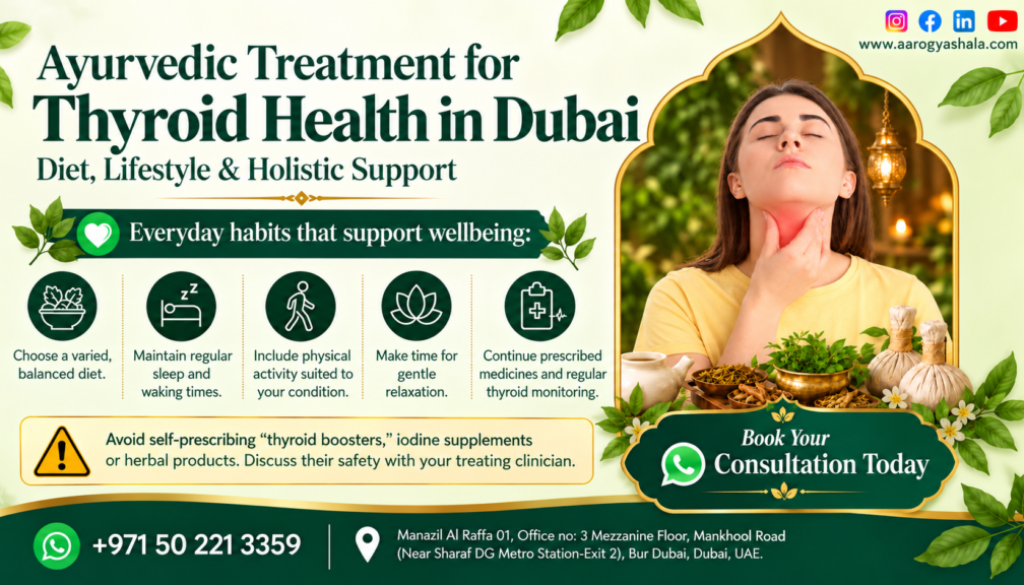
Choose a Varied, Balanced Diet
There is no single “thyroid diet” that treats every thyroid disorder. A balanced eating pattern helps meet your nutritional needs and supports general health.
Practical choices include:
- Vegetables and fruits.
- Wholegrains and other fibre-containing foods.
- Pulses, eggs, fish or other suitable protein sources.
- Dairy foods or appropriate alternatives.
- Moderate amounts of unsaturated fats.
Avoid restrictive diets unless there is a clear medical reason. Ordinary portions of vegetables such as broccoli and cabbage generally do not need to be excluded. A gluten-free diet is not routinely necessary unless you have coeliac disease or another diagnosed reason to avoid gluten.
Be Careful With Iodine Supplements
Your thyroid needs iodine, but more is not necessarily better. Excess iodine from supplements or concentrated seaweed products, including kelp, can worsen certain thyroid conditions.
Do not start iodine supplements simply because you have a thyroid diagnosis. Your requirements depend on your health, diet and circumstances, including pregnancy. Ask your treating clinician for individual advice.
Use Supplements Only When Appropriate
Iron, vitamin D, vitamin B12 or other supplements may be recommended for a specific deficiency or clinical need. Taking high doses without assessment is not a reliable way to improve thyroid function.
Tell your clinician about all supplements, including hair and nail products containing biotin, because biotin can interfere with thyroid blood test results. Follow the clinician’s or laboratory’s instructions before testing.
Take Thyroid Medicines Correctly
If you take levothyroxine, consistent timing matters. Food and some supplements can reduce its absorption.
Calcium and iron supplements are common examples of products that interfere with levothyroxine when taken too close together. Follow your prescription instructions and ask your doctor or pharmacist how to separate your medicine from meals, supplements and other medicines.
Never change your thyroid dose because you feel better, lose weight or start an Ayurvedic programme. Dose changes should be guided by your prescribing clinician and appropriate blood tests.
Lifestyle Habits for General Wellbeing
Maintain a Consistent Sleep Routine
Aim for regular sleeping and waking times and allow time to unwind in the evening. Persistent tiredness or insomnia deserves review rather than being attributed only to stress.
Choose Comfortable Physical Activity
Discuss an activity level suited to your symptoms and medical condition. Walking, gentle stretching and gradual strength exercises may form part of a general wellbeing routine.
If you have an uncontrolled overactive thyroid, a fast heartbeat or significant weakness, seek medical advice before strenuous exercise.
Make Space for Relaxation
Gentle breathing exercises, mindfulness or comfortable yoga may help you manage everyday stress. These practices should be viewed as wellbeing support, rather than treatments proven to correct abnormal thyroid hormone levels.
Are Ayurvedic Herbs Safe for Thyroid Conditions?
Herbal products need an individual safety review. “Natural” does not mean that a product cannot affect hormone levels or interact with medicines.
Ashwagandha is not recommended for people with thyroid disorders by the US National Center for Complementary and Integrative Health. It may also interact with thyroid hormone medicines. Do not self-prescribe it as a “thyroid booster.”
Before using any herbal preparation, share its complete ingredient list with your treating clinician. Tell your Ayurvedic practitioner about your diagnosis, medicines, pregnancy plans and other health conditions.
When Should You Seek Medical Advice?
Arrange a medical review for persistent symptoms, a new neck lump or swelling, or difficulty swallowing. If you are pregnant or planning pregnancy, discuss your thyroid treatment promptly because monitoring and treatment needs may change.
Seek emergency care for chest pain, severe breathlessness, fainting, or a very fast heartbeat accompanied by fever or confusion. These symptoms should not wait for a routine supportive-care appointment.
Thyroid Health Support at Aarogyashala in Bur Dubai
At Aarogyashala Advanced Ayurveda Medical Centre, Bur Dubai, Dubai, a consultation is an opportunity to discuss your concerns and explore the appropriate role of Ayurvedic supportive care.
Bring your recent thyroid reports, a list of prescribed medicines and details of any supplements you use. This information helps support an informed discussion about eating habits, routines, safety and follow-up.
Progress should be reviewed through both your experience and the medical monitoring recommended by your treating doctor.


Book Your Consultation Today