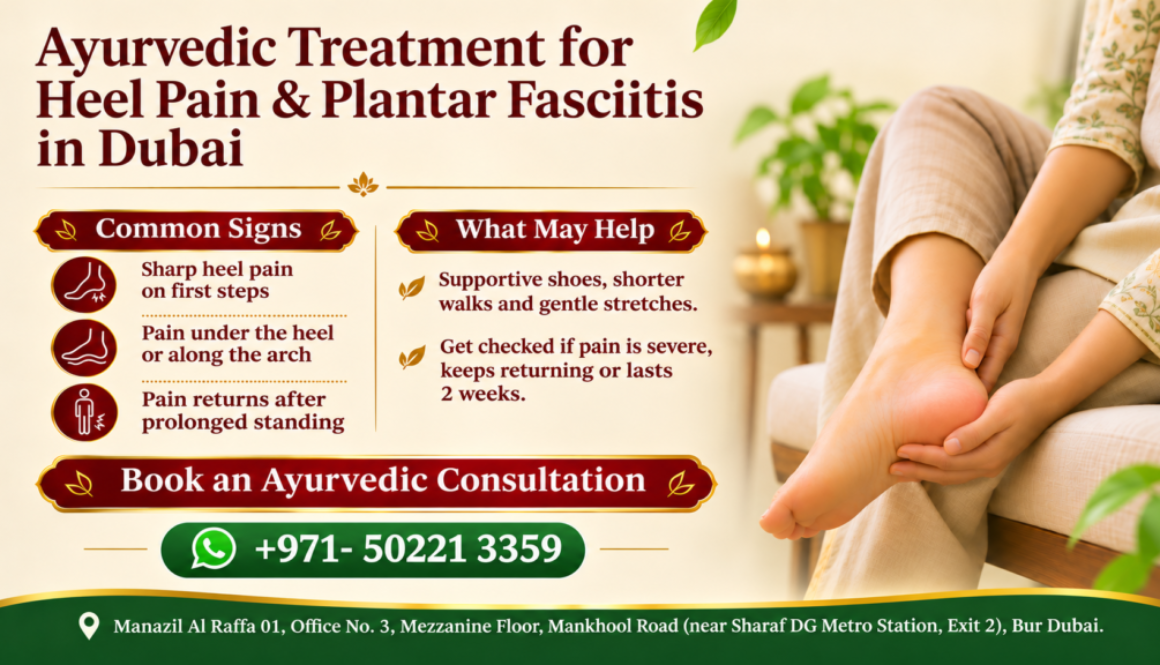
Ayurvedic Treatment for Heel Pain & Plantar Fasciitis in Dubai
Ayurvedic Treatment for Heel Pain & Plantar Fasciitis in Dubai:
Do your first steps out of bed bring a sharp pain under your heel? Does the pain ease after you walk around, then return after a long shift on your feet? This pattern is common with plantar fasciitis. If you’re exploring Ayurvedic treatment for plantar fasciitis in Dubai, understanding what’s causing your heel pain can help you choose the right care.
What is plantar fasciitis?
The plantar fascia is a strong band of tissue that runs along the sole of your foot, connecting the heel bone to your toes. It helps support your arch and absorb impact as you walk. Repeated strain can make the area under the heel painful and stiff. Long periods of standing, an increase in walking or running, and shoes with poor cushioning or support can contribute to symptoms.
Common symptoms include:
- Pain under the heel or along the arch.
- Sharp pain during your first few steps in the morning or after sitting.
- Pain that eases as you move but returns after prolonged standing, walking, or running.
- Discomfort when climbing stairs or lifting your toes.
Ayurvedic treatment for heel pain in Bur Dubai
At Aarogyashala Advanced Ayurveda Medical Centre LLC, an Ayurvedic consultation is an opportunity to discuss when your heel pain started, which activities make it worse, and how it affects your daily routine. Dr. Rekha Baldodia, a DHA-licensed Specialist Ayurveda Practitioner, can discuss your interest in Ayurvedic care and whether your symptoms warrant further medical or physiotherapy assessment.
Evidence for Ayurvedic therapies specifically for plantar fasciitis remains limited. If you’re considering traditional therapies, discuss them as complementary options alongside established care such as activity modification, supportive footwear, and targeted stretching. Tell your practitioner about any medicines or supplements you take before starting an Ayurvedic preparation.
Heel pain treatment in Dubai begins with finding the cause
Pain underneath the heel that is worst after rest often points to plantar fasciitis. Pain at the back of the heel, pain that begins suddenly after an injury, or pain with tingling or numbness can have other causes. A healthcare professional can assess your symptoms and guide you toward suitable treatment.
If your symptoms fit plantar fasciitis, these everyday changes can help:
- Choose cushioned, supportive shoes. Look for heel cushioning and arch support, especially if you stand or walk for much of the day.
- Reduce activities that aggravate the pain. Shorten long walks or runs and take breaks from prolonged standing while symptoms settle.
- Limit barefoot walking on hard floors. Wear supportive footwear at home if walking on tiles brings on pain.
- Use gentle, targeted stretches. A physiotherapist can show you how to stretch your calf and plantar fascia and adjust the exercises to your symptoms.
When should you get heel pain checked?
Arrange a medical assessment if the pain is severe, keeps returning, affects daily activities, or hasn’t improved after about two weeks of self-care. If you have diabetes, tingling, or reduced sensation in your foot, get it checked promptly. Seek urgent medical care if you have severe heel pain after an injury or can’t walk or bear weight.

Ayurvedic Treatment for Heel Pain & Plantar Fasciitis in Dubai
Frequently Asked Questions
-
Plantar fasciitis often causes pain when you first put weight on your foot after a period of rest. It may ease after a few minutes of walking and return later after prolonged activity.
-
A heel spur can appear on an X-ray in people with or without plantar fasciitis. Your symptoms and physical examination help a healthcare professional determine what is causing the pain.
-
You can discuss complementary Ayurvedic care with your practitioner while following your physiotherapy plan. Evidence supports targeted calf and plantar fascia stretching, while evidence for Ayurvedic therapies for this condition remains limited.
Book Your Consultation Today