
Ayurvedic Treatment for Hair Loss in Bur Dubai
Ayurvedic Treatment for Hair Loss in Bur Dubai: Causes, Diet & Personalized Care
Hair loss can affect your confidence and raise questions about your health. Whether you notice increased shedding, a widening parting, or thinning around the hairline, understanding the cause is the first step towards appropriate care.
For people considering Ayurvedic treatment for hair loss in Bur Dubai, a personalized approach can include reviewing eating habits, daily routines, scalp care, and medical history. However, traditional therapies should complement appropriate medical assessment. They should not delay diagnosis or replace treatment prescribed for an underlying condition.
What Causes Hair Loss?
Hair loss has several possible causes, and different conditions require different treatments. A product that suits one person may offer little benefit to another.
Common causes include:
- Hereditary hair loss: Genetic factors can cause gradual thinning in men and women.
- Illness or significant stress: Increased shedding may develop after a fever, surgery, childbirth, or a stressful event.
- Nutritional deficiencies: Inadequate protein or iron intake can contribute to hair loss.
- Thyroid disorders: Changes in thyroid function can affect hair growth.
- Autoimmune conditions: Alopecia areata can cause patches of hair loss.
- Scalp conditions: Infection and inflammatory conditions may affect the scalp and hair follicles.
- Hair styling practices: Tight hairstyles can damage follicles, while excessive heat and chemical treatments can cause breakage.
- Certain medications: Some medicines can contribute to shedding. Discuss concerns with your doctor before making any changes.
Living in Dubai does not automatically explain hair loss. Avoid assuming that water quality or the weather is the cause without considering your medical history and pattern of hair loss.
How Does Ayurveda Approach Hair Loss?
Ayurveda traditionally considers diet, lifestyle, and individual constitution when planning care. A consultation may explore your eating patterns, sleep, stress, and daily habits alongside your hair and scalp concerns.
Some Ayurvedic approaches include herbal preparations, oils, or relaxation therapies. Their traditional use does not establish that they can reverse hair loss. Scientific evidence supporting Ayurvedic hair regrowth treatments remains limited, and results should never be guaranteed.
Product safety also matters. Some Ayurvedic preparations may contain harmful amounts of metals, and herbal products can interact with medicines. Discuss ingredients and suitability with a qualified healthcare professional before starting treatment.
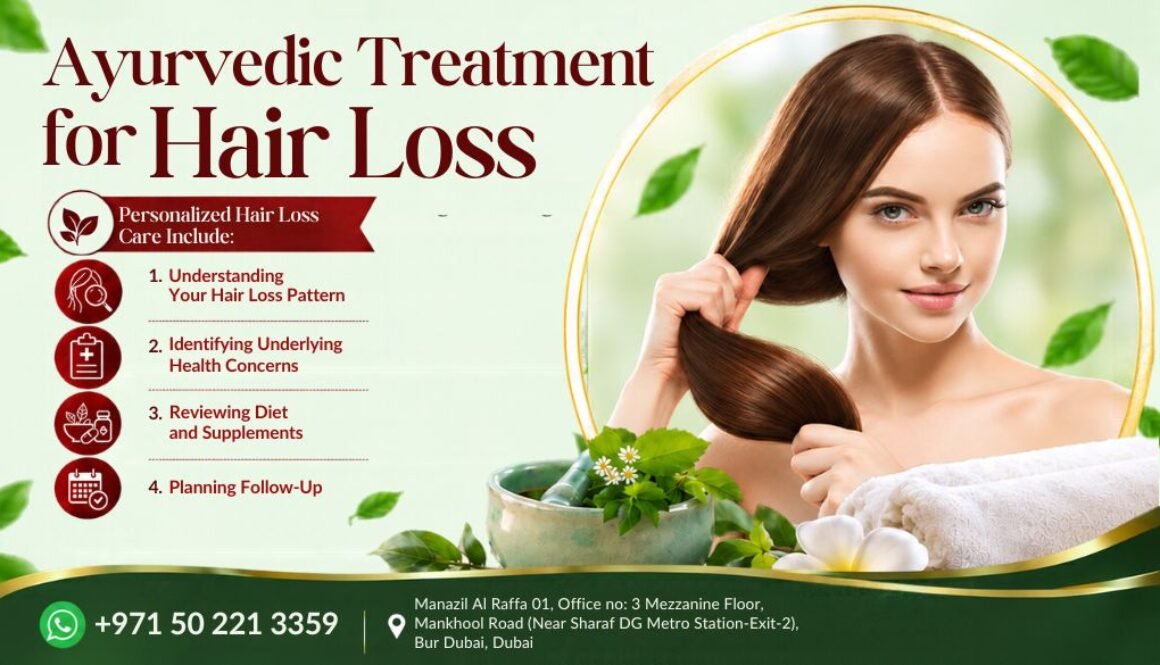
What Should Personalized Hair Loss Care Include?
1. Understanding Your Hair Loss Pattern
An assessment should establish when the problem started, whether it involves shedding or breakage, and whether thinning is gradual or patchy. Family history, recent illness, medication changes, and scalp symptoms provide useful clues.
2. Identifying Underlying Health Concerns
Depending on the findings, a doctor may recommend blood tests or further scalp assessment. Tests should follow your symptoms and examination rather than a standard package for everyone.
3. Reviewing Diet and Supplements
A nutritional review can help identify restrictive eating patterns or possible deficiencies. Supplements are most useful when there is a confirmed need; taking more nutrients does not necessarily improve hair growth.
4. Planning Follow-Up
Personalized care should include realistic goals and review appointments. A dermatologist can help establish the diagnosis and discuss treatments supported by evidence for your particular condition.
Diet for Hair Health
A balanced diet supports normal hair growth and overall health. It cannot cure every cause of hair loss, but consistent eating habits are a practical part of a care plan.
Aim for varied meals that include:
- Protein sources: Lentils, beans, eggs, fish, lean meat, tofu, or dairy, according to your preferences.
- Iron-containing foods: Pulses, leafy vegetables, fortified foods, and lean meat.
- Fruit and vegetables: Include a variety across the week.
- Whole grains: Oats, brown rice, and wholegrain bread can form part of balanced meals.
- Nuts and seeds: Include suitable portions if you have no relevant allergies.
Avoid crash diets and severely restrictive eating plans. Inadequate calories, protein, or iron can contribute to hair loss. High doses of certain supplements can also worsen it, so avoid starting “hair growth” supplements without professional advice.
Gentle Hair and Scalp Care
Your daily routine can help reduce avoidable damage:
- Use a gentle shampoo and conditioner suitable for your hair.
- Detangle carefully without pulling.
- Limit frequent use of high-heat styling tools.
- Avoid hairstyles that place repeated tension on the scalp.
- Handle wet hair gently and reduce harsh chemical processing.
These measures can reduce breakage and damage, although they do not treat every underlying cause of hair loss.
Can Ayurvedic Oils Regrow Hair?
Do not assume that an oil or herbal preparation will restore lost hair. Suitability depends on the ingredients, scalp condition, and cause of hair loss. Ask your clinician about any product you plan to use, and stop using it if irritation develops.
When Should You Seek Medical Assessment?
Arrange an assessment if you notice sudden or patchy hair loss, rapid progression, persistent scalp discomfort, or changes that concern you. Hair loss accompanied by scaling, inflammation, or other health symptoms also deserves attention.
Early assessment can help identify conditions that need specific treatment and prevent time being lost on unsuitable products.

Frequently Asked Questions