
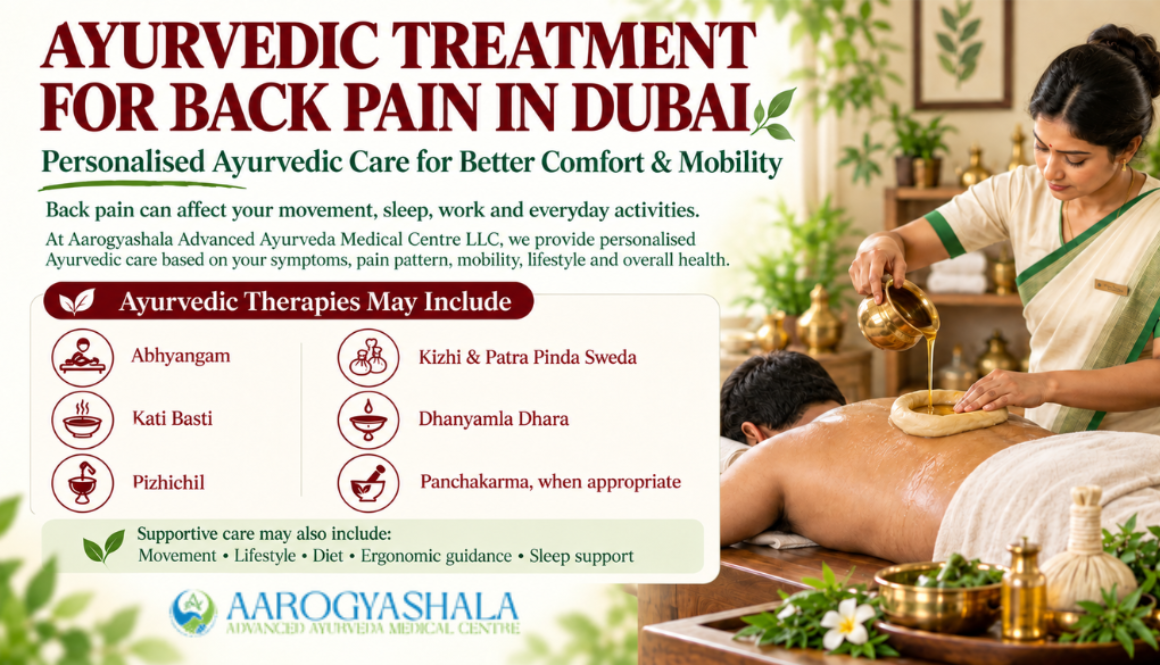
Ayurvedic treatment for Back Pain in Dubai | Aarogyashala
Ayurvedic treatment for Back Pain in Dubai: Leading Ayurveda Clinic in Bur Dubai
**Back pain is a common condition that can affect movement, sleep, work and everyday activities. It may develop suddenly after lifting or injury, or gradually due to physical strain, age-related changes, reduced activity or an underlying health condition.
At Aarogyashala Advanced Ayurveda Medical Centre LLC, we offer personalised Ayurvedic treatment for back pain in Dubai as a complementary approach to medical care, physiotherapy and appropriate exercise. Located on Mankhool Road in Bur Dubai, Dubai, our clinic develops individual care plans according to the patient’s pain location, symptoms, duration, mobility, body constitution, occupation, activity level, posture, current medicines, previous injuries or surgery and complete medical history.
Back pain is a symptom rather than one specific disease. An accurate diagnosis is particularly important when pain is severe, persistent, recurrent or accompanied by neurological symptoms.
What Is Back Pain?
Back pain can occur anywhere from the neck and upper back to the lower spine and tailbone. Lower-back pain is especially common and is generally felt between the lower ribs and buttocks.
Low-back pain as pain between the lower edge of the ribs and the buttocks. It may be acute, subacute or chronic and can affect movement, work, quality of life and emotional well-being.
Many episodes improve with time, suitable activity and conservative care. However, some require medical investigation or specialist treatment.
Common Types of Back Pain
Back pain may be classified according to how long it lasts:
- Acute back pain: Lasts for a few days or weeks
- Subacute back pain: Continues beyond the initial acute period
- Chronic back pain: Persists for three months or longer
- Recurrent back pain: Improves but returns repeatedly
It may also be described according to its pattern:
Localised back pain
Pain remains mainly in one area of the back and may be related to muscles, ligaments, joints or other spinal structures.
Referred pain
Pain is felt in another area, such as the buttock or hip, without necessarily following a specific nerve pathway.
Radicular pain
Pain travels along a nerve pathway, often into the leg. It may be accompanied by tingling, numbness or weakness.
Sciatica
Sciatica refers to symptoms associated with irritation or compression of the sciatic nerve. Pain may travel from the lower back or buttock down the leg.
Patients seeking lower back pain treatment in Bur Dubai should be assessed to identify the likely pain pattern and underlying cause.
Common Signs and Symptoms
Back pain may involve:
- Dull or aching discomfort
- Sharp or shooting pain
- Muscle tightness or spasm
- Back stiffness
- Reduced movement
- Pain after prolonged sitting or standing
- Pain during bending or lifting
- Difficulty getting out of bed or a chair
- Pain extending into the buttock or leg
- Tingling or numbness
- Leg weakness
- Disturbed sleep
- Difficulty walking or performing everyday tasks
Neurological symptoms such as weakness, numbness or bladder and bowel changes require careful evaluation.
Possible Causes of Back Pain
Back pain may result from:
- Muscle or ligament strain
- Sudden or awkward movement
- Repetitive lifting
- Disc-related conditions
- Sciatica
- Spinal arthritis
- Spinal stenosis
- Osteoporosis or compression fracture
- Spondylolisthesis
- Previous injury
- Reduced muscle strength
- Prolonged inactivity
- Certain occupational activities
In many cases, no single structural cause can fully explain the symptoms.
Back Pain From Other Medical Conditions
Pain felt in the back may sometimes originate from another area of the body. Possible causes include conditions involving the:
- Kidneys or urinary system
- Gallbladder
- Pancreas
- Abdomen
- Pelvic organs
- Blood vessels
- Lungs
- Reproductive system
This is why new, severe or unexplained back pain should not automatically be attributed to a muscle problem.
Risk Factors
Factors that may increase the likelihood of developing or continuing to experience back pain include:
- Physically demanding work
- Repetitive lifting or twisting
- Prolonged sitting
- Reduced physical activity
- Weak supporting muscles
- Previous back injury
- Increasing age
- Smoking
- Excess body weight
- Poor sleep
- High stress
- Osteoporosis
- Certain medical conditions
Posture may influence comfort and physical load, but there is no single “perfect posture” that prevents all back pain. Regular movement and varying positions are usually more practical than maintaining one rigid posture throughout the day.
How Is Back Pain Medically Evaluated?
A healthcare professional may assess:
- Location and duration of pain
- Factors that worsen or relieve symptoms
- Leg pain, weakness or numbness
- Walking and movement
- Muscle strength
- Reflexes and sensation
- Bladder or bowel symptoms
- Medical history
- Previous injuries or surgery
- Current medicines
An X-ray, MRI scan, CT scan, blood test or another investigation may be recommended when a fracture, infection, nerve compression, cancer or other specific condition is suspected.
Imaging is not always necessary for uncomplicated back pain. The decision should be based on symptoms, examination and warning signs.
Understanding Back Pain and Kati Shoola in Ayurveda
In Ayurveda, lower-back pain-like presentations are often discussed in relation to Kati Shoola, meaning pain in the lower-back region. Other Ayurvedic descriptions may be considered depending on whether pain travels into the legs or is associated with stiffness and restricted movement.
According to Ayurvedic principles, aggravated Vata dosha may be associated with pain, stiffness, dryness, muscle spasm and restricted mobility. The practitioner may also consider the condition of Asthi Dhatu, associated with bone tissue, and Mamsa Dhatu, associated with muscle tissue.
An Ayurvedic assessment may review:
- Location and nature of the pain
- Duration and severity
- Restricted movements
- Pain travelling into the leg
- Numbness or weakness
- Sleep
- Digestion and appetite
- Previous injuries
- Occupation and daily activity
- Body constitution or Prakriti
- Current medicines and medical reports
These traditional concepts help personalise supportive care but do not replace neurological, orthopaedic or medical evaluation.
How Ayurveda May Support Back-Pain Management
Personalised Ayurvedic treatment for back pain in Dubai may support selected aspects of symptom management and general well-being alongside appropriate medical care.
Depending on the individual assessment, care may focus on:
- Supporting back comfort
- Reducing the feeling of stiffness
- Encouraging safe movement
- Supporting flexibility
- Promoting relaxation
- Improving daily routines
- Supporting sleep
- Providing individual diet and lifestyle guidance
- Encouraging appropriate physical activity
Ayurvedic care cannot guarantee permanent relief, repair damaged spinal discs or reverse severe structural changes. Outcomes vary according to the cause, duration, severity, nerve involvement, lifestyle and response to treatment.
Personalised Ayurvedic Treatment for Back Pain in Dubai
Before recommending an Ayurvedic treatment for back pain in Dubai, the practitioner may review:
- Medical diagnosis
- Pain location and intensity
- Duration and recurrence
- Range of movement
- Leg pain or neurological symptoms
- X-ray or MRI findings
- Previous injuries or operations
- Work and physical activities
- Current physiotherapy
- Prescription medicines
- Other medical conditions
- Body constitution and digestive health
The treatment plan should reflect the underlying condition rather than applying the same programme to every patient.
Ayurvedic Therapies That May Be Considered
Following consultation at our Ayurvedic clinic in Bur Dubai, selected therapies may be included in a personalised care programme.
Abhyangam
Abhyangam is a traditional Ayurvedic oil application and massage. Gentle techniques may promote relaxation and support comfort and mobility in suitable patients.
Strong pressure may be inappropriate following an acute injury or when fracture, nerve compression, severe osteoporosis or another serious condition is suspected.
Kati Basti
Kati Basti is a localised therapy in which professionally selected warm oil is retained over the lower-back area for a controlled period.
It may provide supportive comfort for selected patients but cannot repair a damaged disc or replace treatment for significant nerve compression.
Pizhichil
Pizhichil involves the controlled application of warm medicated oil with gentle therapeutic movements. It may be considered for selected patients with stiffness after professional assessment.
Kizhi
Kizhi uses prepared herbal bundles applied with controlled movements and temperature. Different types may be selected depending on the condition and stage of pain.
Patra Pinda Sweda
Patra Pinda Sweda is a form of Kizhi prepared with selected herbal leaves and other ingredients. It may be considered for some muscle and joint presentations.
Dhanyamla Dhara
Dhanyamla Dhara involves the controlled application of a traditionally prepared fermented herbal liquid. It may be considered according to the patient’s symptoms and constitution.
Panchakarma
A Panchakarma treatment for back pain should not be presented as one standard programme. Selected procedures may be recommended according to the patient’s health, strength, diagnosis and treatment tolerance.
Ayurvedic Herbal Preparations
A qualified practitioner may prescribe selected Ayurvedic preparations after reviewing the patient’s medical conditions and medicines.
Herbal products may cause side effects or interact with prescription medicines. Patients should disclose every medicine and supplement to their healthcare providers.
Important Treatment Precautions
Not every therapy is safe for every cause of back pain. Strong massage, intense stretching, forceful spinal manipulation or excessive heat may be inappropriate when there is:
- Acute injury
- Suspected fracture
- Severe osteoporosis
- Progressive nerve compression
- Infection
- Recent surgery
- Significant inflammation
- An uncertain diagnosis
Ayurvedic treatment should not delay urgent medical assessment.
Ayurvedic Treatment for Lower Back Pain
An Ayurvedic treatment for lower back pain may combine selected external therapies with appropriate movement, lifestyle and ergonomic guidance.
Treatment should be personalised according to whether the pain is muscular, joint-related, disc-related or associated with nerve symptoms. The presence of leg weakness, saddle numbness or bladder and bowel changes requires urgent medical assessment rather than routine therapy.
Ayurvedic Treatment for Chronic Back Pain
Chronic back pain may involve physical, psychological, social and occupational factors. A programme for Ayurvedic treatment for chronic back pain may therefore consider:
- Movement and physical conditioning
- Sleep quality
- Stress
- Work demands
- Fear of movement
- Daily routines
- Pain-coping strategies
- General health
Persistent pain does not always mean that damage is continuing. A doctor or physiotherapist can help patients understand their condition and gradually return to appropriate activity.
Ayurvedic Treatment for Back Stiffness
An Ayurvedic treatment for back stiffness may include selected external therapies, movement advice and professionally guided exercise.
Prolonged inactivity can increase stiffness and muscle weakness. Treatment should therefore encourage safe movement rather than relying only on passive therapies.
Physiotherapy and Therapeutic Exercise
Physiotherapy may help improve strength, mobility and confidence in movement. A personalised programme may include:
- Range-of-motion exercises
- Core and back strengthening
- Hip and leg strengthening
- Flexibility exercises
- Walking or aerobic activity
- Movement education
- Gradual return to work or sport
Exercise should be progressed according to ability. Patients should stop and seek professional advice if an exercise causes new numbness, progressive weakness or severe pain.
Stay Active and Avoid Prolonged Bed Rest
Most patients with uncomplicated back pain are encouraged to remain active within comfortable limits. Prolonged bed rest may contribute to stiffness, weakness and delayed return to normal activities.
Helpful principles include:
- Continue gentle daily movement
- Change position regularly
- Take short walks
- Gradually return to normal activities
- Avoid remaining in bed for extended periods
- Pace demanding tasks
- Rest briefly when needed without becoming completely inactive
A healthcare professional may recommend temporary restrictions after a fracture, surgery or specific injury.
Workplace Ergonomics
For people working at desks or computers in Dubai, prolonged sitting can increase discomfort. Helpful adjustments may include:
- Keep the screen near eye level
- Support the lower back comfortably
- Keep feet supported
- Position the keyboard and mouse within easy reach
- Avoid leaning repeatedly to one side
- Stand and move at regular intervals
- Vary sitting and standing positions
- Use a headset for long calls
- Avoid working from a bed or very soft sofa for extended periods
The best position is often the next comfortable position. Frequent movement may be more helpful than holding one posture rigidly all day.
Safe Lifting Advice
When lifting:
- Plan the movement before starting
- Keep the load close to the body
- Use a stable stance
- Bend through the hips and knees where comfortable
- Avoid sudden twisting
- Turn the feet instead of twisting the spine
- Divide heavy loads
- Ask for assistance when necessary
- Use lifting equipment at work when available
No single lifting technique prevents every injury, but reducing sudden and excessive strain can help.
Diet and Lifestyle Guidance
No particular food can cure back pain or rebuild a damaged spinal disc. General recommendations may include:
- Eat regular, balanced meals
- Include vegetables, fruits and suitable proteins
- Maintain adequate hydration
- Limit heavily processed foods
- Maintain a healthy weight when appropriate
- Avoid smoking
- Limit alcohol
- Follow a regular sleep schedule
- Participate in suitable physical activity
- Manage diabetes and bone-health conditions
Patients with osteoporosis should discuss calcium, vitamin D, medicines and fracture prevention with their doctor.
Stress, Sleep and Back Pain
Pain may disrupt sleep, while poor sleep and stress may increase sensitivity to pain. A broader programme for natural back pain management in Dubai may include:
- Consistent sleep and waking times
- Relaxation or breathing exercises
- Gentle yoga when appropriate
- Regular physical activity
- Pacing of work and household tasks
- Psychological support when pain affects mood
Stress management does not mean that pain is imaginary. It recognises that physical discomfort, sleep and emotional well-being can influence one another.
Benefits of Personalised Ayurvedic Care
Possible benefits of personalised Ayurvedic care for Kati Shoola include:
- Detailed assessment of symptoms and lifestyle
- Care adapted to the possible cause
- Consideration of body constitution
- Professionally selected therapies
- Diet and daily-routine guidance
- Support for relaxation and sleep
- Integration with physiotherapy
- Review of current medicines
- Ongoing monitoring and adjustment
- Recognition of symptoms requiring medical referral
No outcome can be guaranteed.
Why Choose Aarogyashala in Bur Dubai?
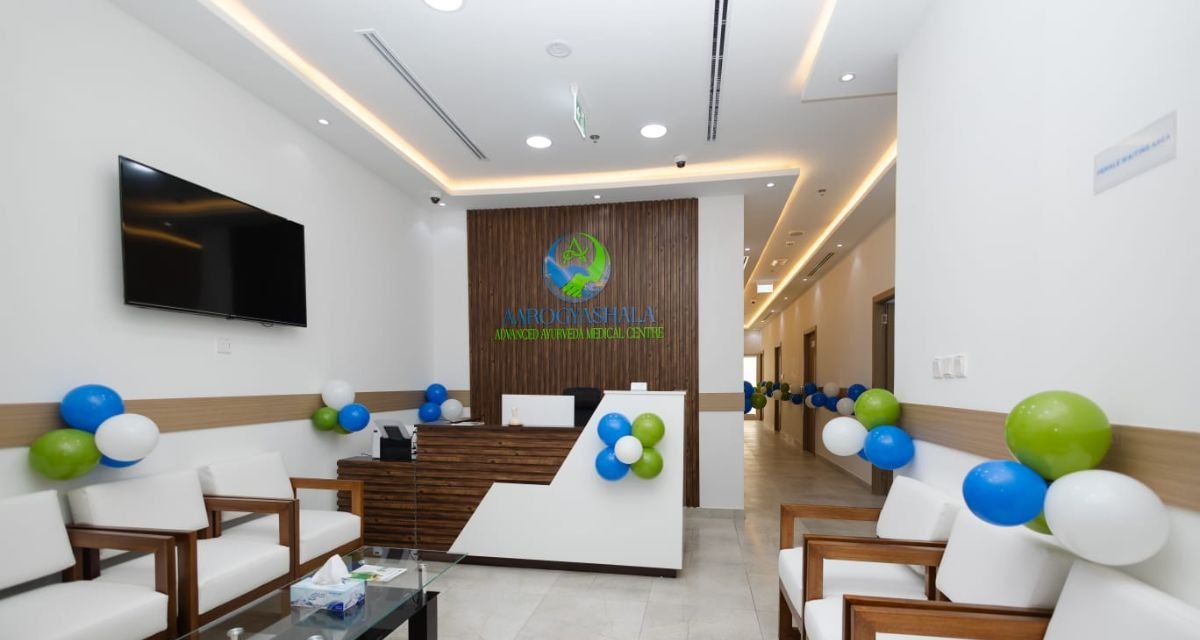
Aarogyashala Advanced Ayurveda Medical Centre LLC provides personalised Ayurvedic care in a professional and welcoming environment in Bur Dubai, Dubai.
Patients seeking back pain treatment in Bur Dubai may choose Aarogyashala for:
- Individual Ayurvedic consultation
- Personalised treatment planning
- Traditional therapies under professional supervision
- Consideration of medical reports and medicines
- Diet and lifestyle guidance
- Support alongside physiotherapy and exercise
- Convenient Mankhool Road location
- Easy access from Sharaf DG Metro Station—Exit 2
- Follow-up based on individual progress
If you are looking for an Ayurvedic doctor for back pain in Dubai, our team can evaluate your symptoms and advise whether complementary Ayurvedic care may be appropriate.
When to Seek Immediate Medical Attention
Seek emergency medical care for:
- Loss of bladder or bowel control
- Difficulty starting or controlling urination
- Numbness around the genitals, buttocks or inner thighs
- New or progressive weakness in one or both legs
- Severe pain following a fall, accident or injury
- Back pain with chest pain, breathing difficulty or fainting
- Pain with a pulsating sensation in the abdomen
- Sudden loss of sensation or movement
Bladder or bowel changes combined with saddle numbness or leg weakness may indicate cauda equina syndrome, which requires emergency spinal assessment.
Other Warning Signs Requiring Prompt Assessment
Consult a doctor promptly for:
- Back pain with fever or chills
- Unexplained weight loss
- A history of cancer with new back pain
- Severe night pain that does not improve with rest
- Persistent or worsening neurological symptoms
- New pain in someone with severe osteoporosis
- New pain in someone taking long-term steroids
- Pain that remains severe or progressively worsens
- Persistent symptoms following an injury
Frequently Asked Questions