
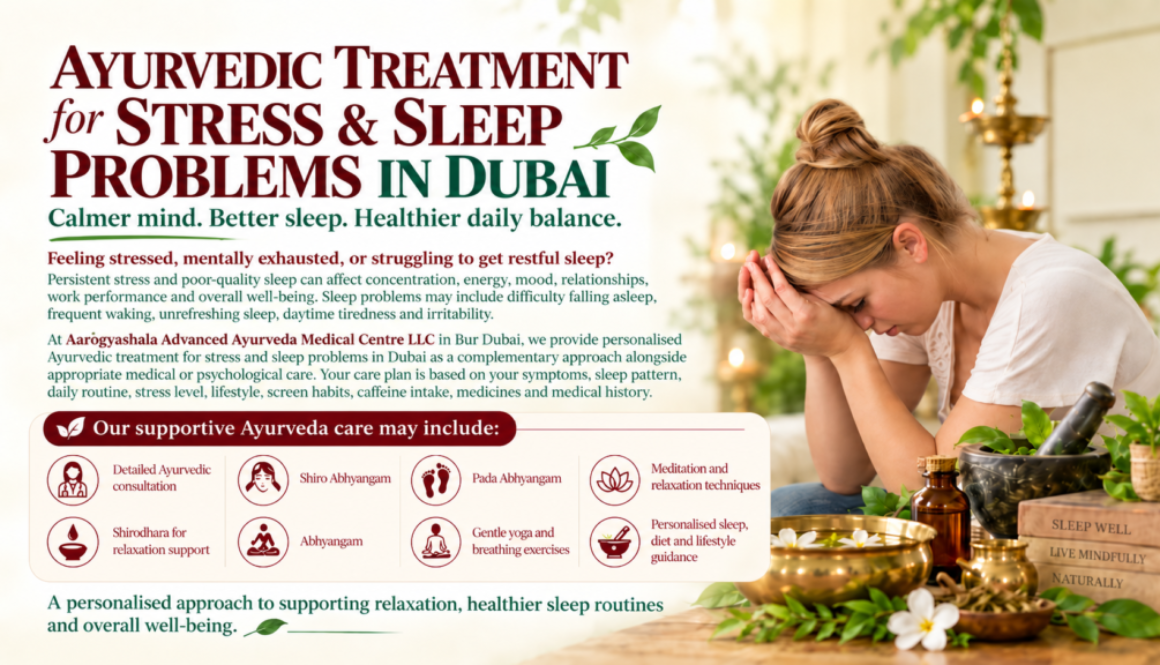
Ayurvedic treatment for Stress and Sleep Problems in Dubai
Ayurvedic treatment for Stress and Sleep Problems in Dubai: Advanced Ayurvedic Treatment in Bur Dubai
Ayurvedic treatment for Stress in Dubai offers a personalised and holistic approach to supporting relaxation, emotional well-being and better sleep. Stress and occasional sleep disturbances are common parts of modern life. However, persistent stress or poor-quality sleep can affect concentration, energy, mood, relationships and work performance. In some cases, ongoing sleep problems may be connected to insomnia, anxiety, depression, sleep apnoea, chronic pain or another condition requiring professional assessment.
At Aarogyashala Advanced Ayurveda Medical Centre LLC, we provide personalised Ayurvedic treatment for stress and sleep problems in Dubai as a complementary approach to conventional medical and psychological care. Located on Mankhool Road in Bur Dubai, Dubai, our clinic develops individual care plans based on the patient’s symptoms, sleep pattern, daily routine, stress level, body constitution, digestive health, caffeine and alcohol intake, screen habits, medicines and medical history.
Ayurvedic care may support relaxation, healthier daily routines and general well-being. It should not replace necessary treatment from a doctor, sleep specialist or qualified mental-health professional.
Understanding Stress and Sleep Problems
Stress is the body’s natural response to demanding or challenging situations. Short-term stress can sometimes improve alertness and performance. When stress becomes persistent or overwhelming, however, it may affect both physical and emotional health.
Sleep problems can involve:
- Difficulty falling asleep
- Frequent waking during the night
- Waking earlier than intended
- Poor-quality or unrefreshing sleep
- Irregular sleeping and waking times
- Excessive daytime tiredness
- Difficulty concentrating
- Irritability or mood changes
Not every night of poor sleep indicates a sleep disorder. Medical assessment may be appropriate when symptoms persist, regularly affect daytime functioning or create a safety risk.
What Is Insomnia?
Insomnia is a common sleep disorder involving difficulty falling asleep, staying asleep or obtaining good-quality sleep despite having enough opportunity to rest. It can affect daily functioning and may cause tiredness, poor concentration or changes in mood.
Insomnia may be:
- Short-term: Lasting for several days or weeks, often during stress, illness or a major life change.
- Chronic: Occurring regularly for three months or longer.
Persistent insomnia requires appropriate evaluation. Treatment may include sleep-hygiene measures, cognitive behavioural therapy for insomnia, management of an underlying condition or medication when medically appropriate.
The Relationship Between Stress and Sleep
Stress and sleep can affect each other in a repeating cycle.
Stress may make it difficult to relax, fall asleep or remain asleep. Poor sleep may then reduce emotional resilience and make everyday challenges feel more overwhelming. Over time, this cycle can contribute to fatigue, irritability, anxiety and reduced productivity.
Common stress-related sleep patterns include:
- Replaying conversations or problems at bedtime
- Worrying about not getting enough sleep
- Waking with racing thoughts
- Feeling physically tense in bed
- Sleeping lightly or restlessly
- Using screens late at night to distract from worry
- Depending on caffeine to manage daytime tiredness
A programme offering stress management in Bur Dubai should consider both daytime stressors and nighttime habits.
Signs of Prolonged Stress
The effects of stress vary among individuals. Possible signs include:
- Persistent worry
- Irritability
- Muscle tension
- Headaches
- Digestive discomfort
- Rapid heartbeat
- Difficulty concentrating
- Feeling overwhelmed
- Changes in appetite
- Reduced motivation
- Tiredness
- Difficulty relaxing
- Poor or disrupted sleep
These symptoms can also occur with medical or mental-health conditions. A healthcare professional should evaluate persistent or severe symptoms.
Effects of Poor Sleep
Occasional poor sleep may cause temporary tiredness. Long-term sleep difficulties may affect:
- Attention and memory
- Mood and emotional control
- Work performance
- Driving safety
- Physical activity
- Appetite and metabolic health
- Relationships and social life
- Overall quality of life
Extreme daytime sleepiness can create serious driving and workplace risks. Avoid driving or operating machinery if you are struggling to remain alert.
Possible Causes and Contributing Factors
Stress and sleep problems may be influenced by:
- Work pressure
- Financial or relationship concerns
- Anxiety or depression
- Chronic pain
- Thyroid disorders
- Menopause
- Sleep apnoea
- Restless legs syndrome
- Shift work
- Jet lag or travel
- Irregular schedules
- Excessive screen exposure
- Caffeine, nicotine or alcohol
- Certain medicines
- A noisy or uncomfortable bedroom
- Lack of physical activity
- Heavy meals close to bedtime
Identifying the underlying cause is important before starting an Ayurvedic treatment for sleep problems in Dubai.
How Ayurveda May Support Stress and Sleep Management
Personalised Ayurvedic treatment for stress and sleep problems in Dubai may support selected aspects of stress reduction, relaxation and daily-routine improvement.
Depending on the individual assessment, care may focus on:
- Establishing consistent sleeping and waking times
- Supporting relaxation before bedtime
- Encouraging regular meals
- Supporting digestive comfort
- Reducing overstimulation in the evening
- Managing everyday stress
- Introducing gentle physical activity
- Developing practical screen and caffeine limits
- Supporting general physical and emotional well-being
Ayurvedic care cannot guarantee a permanent cure for insomnia, anxiety, depression or another diagnosed disorder. Results vary based on the underlying cause, severity and duration of symptoms, lifestyle, general health and individual response.
Personalised Ayurvedic Treatment for Stress in Dubai
At Aarogyashala, Ayurvedic treatment for stress in Dubai begins with a detailed individual consultation. The practitioner may ask about:
- Main sources of stress
- Emotional and physical symptoms
- Sleep pattern and quality
- Daily routine
- Work schedule
- Digestive health
- Caffeine and alcohol use
- Physical activity
- Current medicines and supplements
- Existing medical or psychological diagnoses
If symptoms indicate severe anxiety, depression or another condition, the patient may be advised to seek assessment from an appropriate healthcare professional.
Personalised Ayurvedic Treatment for Insomnia in Dubai
Before recommending an Ayurvedic treatment for insomnia in Dubai, the practitioner may review:
- How long the problem has been present
- Time usually needed to fall asleep
- Number and duration of nighttime awakenings
- Typical sleeping and waking times
- Daytime tiredness
- Snoring or breathing interruptions
- Restless or uncomfortable legs
- Bedtime screen use
- Caffeine, nicotine and alcohol intake
- Shift work or travel
- Current medicines
- Mental and physical health
A sleep diary may help identify patterns and measure whether a care plan is beneficial.
Ayurvedic Therapies That May Be Considered
After consultation at our Ayurvedic clinic in Bur Dubai, selected therapies may be recommended. These approaches may promote relaxation and general well-being but should not be described as guaranteed treatments for a diagnosed sleep or mental-health disorder.
Shirodhara
Shirodhara for stress and sleep involves the controlled flow of a selected liquid over the forehead. It may promote a sense of relaxation in suitable patients.
Shirodhara cannot be guaranteed to cure insomnia, anxiety or depression. The liquid, temperature and treatment duration must be professionally selected.
Shiro Abhyangam
Shiro Abhyangam is a traditional head massage using selected oil. It may help create a calming routine and reduce the feeling of physical tension for some people.
Abhyangam
Abhyangam is a traditional full-body oil application and massage. It may support relaxation, body awareness and general wellness.
Pada Abhyangam
Pada Abhyangam is a traditional foot massage using selected oil. It may be incorporated into a calming evening or wellness routine when appropriate.
Yoga and breathing exercises
Gentle yoga and breathing practices may support relaxation and awareness of physical tension. They should be adapted to the patient’s ability and health conditions.
Meditation and relaxation
Meditation, progressive muscle relaxation and guided breathing may help create a calmer transition from daytime activity to sleep.
Practical Sleep-Hygiene Recommendations
Healthy sleep habits may improve sleep quality for many people, although they may not be enough to treat chronic insomnia by themselves.
Helpful practices include:
- Maintain consistent sleeping and waking times
- Create a calm bedtime routine
- Keep the bedroom cool, dark and quiet
- Reduce phone, television and computer use before bedtime
- Avoid caffeine late in the day
- Limit nicotine and alcohol
- Exercise regularly during the daytime
- Avoid intense exercise close to bedtime
- Avoid heavy meals immediately before sleeping
- Use the bed mainly for sleep
- Avoid repeatedly checking the time during the night
- Obtain morning daylight when possible
- Limit long or late-afternoon naps
Maintaining a consistent schedule and making the bedroom quiet, dark and comfortable.
Exercise and Daytime Activity
Regular physical activity may support mood, physical health and sleep. Suitable options can include:
- Walking
- Swimming
- Gentle yoga
- Cycling
- Light strength training
- Stretching
Exercise should be adapted to the patient’s health and fitness. Some people sleep better when intense exercise is completed several hours before bedtime.
Diet and Meal Timing
No single food can cure insomnia or anxiety. General guidance may include:
- Eat meals at regular times
- Choose balanced meals
- Avoid repeatedly skipping meals
- Limit heavy or highly spicy meals close to bedtime
- Maintain adequate hydration during the day
- Reduce excessive fluid intake immediately before sleep
- Avoid relying on sugary foods for daytime energy
- Discuss dietary restrictions with a qualified professional
Dubai’s hot climate makes regular daytime hydration important, but excessive fluids just before bed may increase nighttime waking.
Shift Work and Irregular Schedules
Dubai has many healthcare, hospitality, aviation, security and transport professionals who work rotating or night shifts. Shift work can disrupt the body’s normal sleep–wake rhythm.
Helpful measures may include:
- Maintaining a consistent sleep window where possible
- Using blackout curtains
- Reducing noise during daytime sleep
- Planning caffeine carefully
- Obtaining light exposure at appropriate times
- Discussing persistent symptoms with a sleep specialist
- Avoiding driving when dangerously sleepy
An individual plan for sleep disorder support in Bur Dubai should consider the patient’s actual work schedule rather than offering generic bedtime advice.
Benefits of Personalised Ayurvedic Care
Possible benefits of personalised natural stress management in Dubai and sleep support include:
- Detailed review of symptoms and routines
- Consideration of body constitution
- Individual sleep-hygiene recommendations
- Attention to digestion, activity and stress
- Professionally selected relaxation therapies
- Review of current medicines and supplements
- Identification of symptoms needing medical referral
- Ongoing monitoring and care-plan adjustment
- Coordination with medical or psychological treatment
No treatment outcome can be guaranteed.
Why Choose Aarogyashala in Bur Dubai?
Aarogyashala Advanced Ayurveda Medical Centre LLC provides individualised Ayurvedic care in a calm and professional environment in Bur Dubai, Dubai.
Patients seeking natural sleep support in Dubai may choose Aarogyashala for:
- Personalised Ayurvedic consultation
- Detailed review of sleep and daily routines
- Professionally supervised traditional therapies
- Individual diet and lifestyle guidance
- Stress-management recommendations
- Consideration of current medicines and medical history
- A responsible complementary approach
- Convenient Mankhool Road location
- Easy access from Sharaf DG Metro Station—Exit 2
If you are looking for an Ayurvedic doctor for stress and sleep problems, our team can assess your needs and recommend suitable supportive care.
When to Consult a Doctor or Sleep Specialist
Seek professional assessment if:
- Sleep problems persist for several weeks
- Poor sleep regularly affects work or daily activities
- You experience severe daytime sleepiness
- You snore loudly or stop breathing during sleep
- You wake gasping or choking
- Your legs feel persistently restless at night
- Pain repeatedly interrupts sleep
- Anxiety or low mood is persistent
- Sleep problems began after starting a medicine
- You rely regularly on alcohol or non-prescribed products to sleep
When to Seek Urgent Help
Seek immediate emergency or mental-health support for:
- Thoughts of self-harm or suicide
- Severe depression, panic or emotional distress
- Hallucinations, confusion or unusual behaviour
- Several nights with almost no sleep accompanied by unusually high energy, impulsive behaviour or racing thoughts
- Chest pain or severe breathing difficulty
- Sudden weakness, fainting or loss of consciousness
- Extreme sleepiness creating an immediate driving or workplace risk
- Suspected medicine overdose
- Severe withdrawal symptoms
Do not leave a person at immediate risk of self-harm alone. Contact local emergency services or go to the nearest emergency department.


Frequently Asked Questions